What is a pyramid
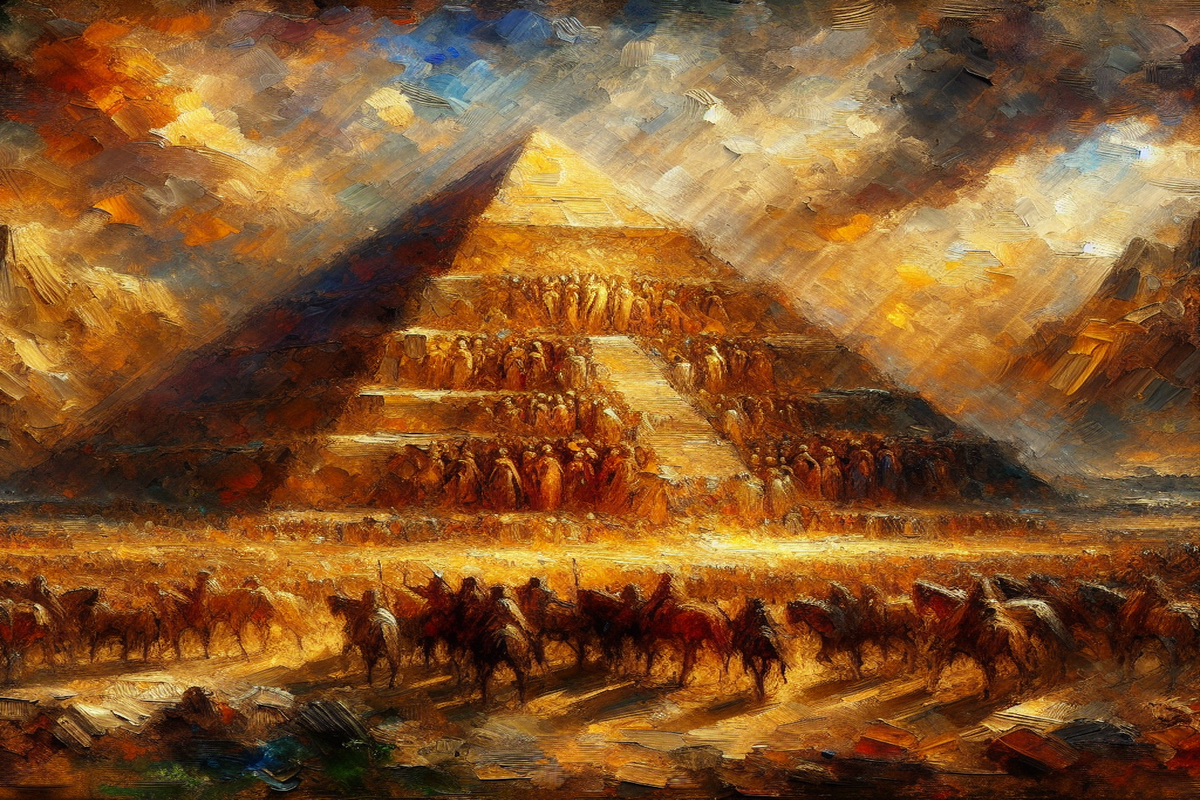
A pyramid is a structure with a polygonal base and faces that converge at an apex or a top edge; its best-known form has a square base and four triangular faces. Pyramids appear in different cultures and periods, serving architectural, ritual, and symbolic functions, and they transcend time and geography.
Pyramids are objects of study for both archaeologists and architects because of their technical complexity and cultural significance. In Mexico, pre-Hispanic pyramids combine engineering, astronomy, and cosmology, and remain essential references for understanding ancient societies.
Historically, the word pyramid covers monumental constructions, geometric shapes in mathematics, and natural structures that recall this silhouette. In paleontology and Earth history, the visual comparison between hills, mounds, and pyramids has helped identify archaeological and paleontological sites of interest.
Origins and evolution of the pyramid as an architectural form
The earliest known monumental pyramids emerged in ancient Egypt, serving as tombs and symbols of elevation toward the sky. In Mesoamerica the pyramid adopts a stepped plan, platforms, and temples on the summit, tied to rituals and the agricultural calendar.
Construction techniques vary, from carved and precisely fitted blocks to adobe walls and stucco finishes. The choice of materials often responds to geographic context and local availability, which explains differences between Egyptian pyramids, Mesoamerican pyramids, and others.
In Mexico, pyramids are the result of centuries of experimentation, enlargement, and continued use, which is why many show distinct construction phases. The layering of strata is useful to archaeologists, similar to how in paleontology we interpret layers containing fossils.
Types of pyramids and functions, from tomb to temple
There are funerary pyramids, ceremonial pyramids, and civic pyramids. Funerary ones, like the Egyptian ones, served as monumental tombs. Mesoamerican pyramids were platforms for temples, observatories, and stages for public rituals.
Some pyramids also served defensive and administrative functions, and others are symbols of political legitimacy. Their visibility in the landscape reinforces the power of those who built them and turns these places into centers of collective memory.
Materials and construction techniques, ancient engineering
The great Egyptian pyramids require precision in stone blocks and astronomical alignment. In Mesoamerica, the stepped construction allowed greater heights with less risk of collapse and facilitated successive enlargements.
Engineering involved logistics, labor, and social organization. Modern studies combine archaeology, topography, and non-invasive technology to understand construction processes, in the same way that in our work with fossils we use tomography and analyses to reconstruct past lives.
The pyramid in Mexican culture, symbols and continuity
In Mexico the pyramid is an icon of civilization and appears in colonial and modern accounts. Plazas with pyramids remain gathering places, sites of memory, and spaces for celebration. In Tultepec we value the cultural fabric that connects traditions, from pyrotechnic practices to museum spaces.
We have already discussed traditions of Tultepec, where the relationship between land, fire, and community is expressed in celebrations. That same social impulse that constructed plazas and pyramids also drives festivities and crafts.
Conservation and museums, how pyramids are protected
The preservation of pyramids involves scientific and political commitments, from structural measures to public interpretation. Museums play a key role in connecting the public with these monuments, contextualizing finds, materials, and construction practices.
At the Museo del Mamut we combine exhibition and outreach, as in other museum projects that explore natural history and heritage. On our site you will find posts related to digital museums of Mexico and the opening of cultural spaces, examples of how the past is preserved and communicated.
Pyramids and Earth sciences, a dialogue with paleontology
Archaeology and paleontology share methods, especially in stratigraphic recording. Layers of human occupation and layers with fossil remains are interpreted using similar criteria, and they reconstruct temporal sequences.
In the Museum we have addressed topics like paleontology and fossils, remains that reveal the past, because the way we read the Earth benefits the interpretation of pyramids and ancient settlements.
Symbolic interpretation, astronomy and calendars
Pyramids are not just physical objects; they are symbolic maps of the cosmos for those who built them. Solar and lunar alignments, views toward cardinal points, and ceremonial routes show a sophisticated handling of time and a link between architecture and the calendar.
Understanding these links requires combining archaeological, ethnographic, and astronomical data. It is this interdisciplinarity that reveals why a pyramid could be a vault of the sky, a public calendar, and a political stage.
Visiting pyramids, what to expect and how to approach them
Visiting a pyramid involves observing stone, layout, and landscape, but also imagining the practices and bodies that used it. The experience is enriched by guides, exhibitions, and complementary resources that explain materials and contexts.
To approach these narratives we recommend reading about local sites and exhibitions while appreciating the connection between tangible heritage and modern narratives, from festivals to museums.
We have already covered aspects of heritage and exhibition in posts like the opening of the Museum of Pyrotechnics and the relationship between art, tradition, and display in projects such as the Torearte exhibition in Cuautitlán.
Conclusion, why it matters to understand what a pyramid is
Defining what a pyramid is goes beyond a geometric shape; it involves understanding collective memories, construction techniques, and relationships with the environment. In Mexico pyramids are both relics and living presences, active pieces in identity and research.
Our commitment at the Museo del Mamut of Tultepec is to offer rigorous and accessible readings, to show how natural history and human history intertwine, and to place pyramids within a broader conversation about conservation, science, and community.